
Francesco
A trained care assistant without an academic diploma — now studying medicine in Foča.
Placed via his vocational qualificationStudying medicine abroad is one of the biggest decisions most families make together. This page answers the questions parents actually ask us.
40 minutes, free — happy to include your child
Who you're talking to
My name is Marcel Kloos, founder of Medschool Experts and a federally licensed dentist. In 2015 I started my dentistry degree in Sofia — in a country I'd never visited before, with no network and no language skills. My state exam came in 2021.
So I know both sides of this decision: your child's excitement, and the worry running underneath it. And I know where this path actually tends to fail — rarely on academics, almost always on organisation, loneliness and having no one to turn to in the first few months. That's exactly why Medschool Experts exists: choosing a university, applying, arriving, support throughout the degree and the return home are now a structured process. We're based in Bern, Switzerland.
I know what the first day in an unfamiliar city feels like, because I lived it myself. That's why nobody here just gets handed an address and a “good luck.”More about me and Medschool Experts →
There are plenty of agencies placing students at universities abroad these days. These four things set us apart — and you can check every one of them.
Admissions procedures, exam regulations and everyday life at a university abroad aren't something we read up on. You speak directly with the founder — who saw this path through to the end himself.
We run one of the largest social media channels on studying medicine abroad. So you can get a feel for us before you've even had your first call.
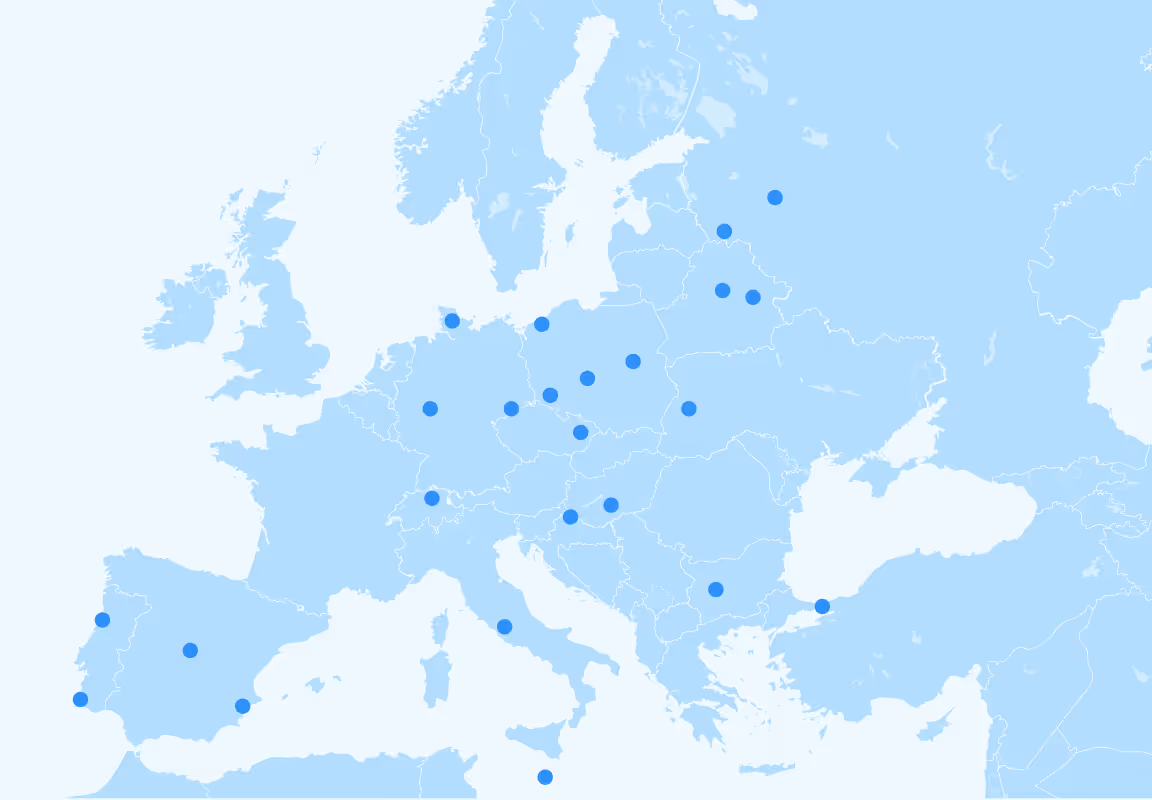
From Europe's most affordable university with no entrance-exam restrictions — the public University of East Sarajevo, where we hold an exclusive agreement — to premium addresses like Semmelweis Budapest, Malta and Cyprus.
Then there are still universities at home. We place students there too — at noticeably higher cost, and only where the university's basic requirements are met. We'll work out whether that path is open to you in the first call.
What our clients say about us
Over 500 placements at 25+ partner universities in over 10 countries. Read how our students and their families experienced working with us in our student stories.
Two things decide whether this path works: how you get in — and what the degree is actually worth at the end.
Some countries deliberately use their medical schools to help fund their own healthcare system. They train beyond domestic demand and offer some places to international students who pay tuition. These places have no entrance-exam restrictions. That's exactly why we can place students regardless of school grades — at a few universities, even with a vocational qualification instead of an academic diploma. Admission is decided by an entrance test, not a number on a transcript.
Six years, 360 ECTS credits, pre-clinical and clinical training much like at home. Teaching is mostly in English. Degrees from EU countries are automatically recognised across the EU under the professional-qualifications directive; your child then applies for their medical licence the same way a graduate of a home university would. The few non-EU universities we work with are listed in the relevant recognition databases and teach to an EU-aligned curriculum, so the equivalence check with your national licensing authority is a routine, predictable process. Transferring into a higher semester, and completing clinical training back home, both remain possible either way.
The cost of living at most of our universities is below what you'd pay at home. And most importantly, your child's career starts several years earlier, instead of after waiting semesters or a detour through an unrelated degree.
Why it's worth it
“Education is the one investment no one can ever take away from you.”
Marcel Kloos, founder of Medschool Experts
Inheritance, savings and property can disappear faster than they were earned. A completed medical degree stays with you: it doesn't depend on a currency, an economy or an employer — and doctors are in demand across the whole of Europe.
A 17-year-old straight out of school needs something different from a 25-year-old starting over after a vocational career. This is exactly where real advice differs from simply handing out a place.
Straight out of school, we recommend universities with a settled group of fellow students, housing close to campus, and a tightly structured timetable. The clearer the framework, the softer the landing. For 17-year-olds, a parent or guardian often joins them on the ground too.
After vocational training, a gap year or waiting semesters, students usually bring more independence with them. Larger university cities and universities with earlier clinical exposure become realistic options too. What matters more here is that the degree fits the specialty they're aiming for.
For a second degree or a career change, every semester counts. We check where prior coursework can be credited, where entry into a higher semester is possible, and where studying can be combined with part-time work.
Swipe or drag to see all three age groups
Which university fits in any individual case isn't something a website can decide. It depends on the transcript, your child's personality and the budget — which is exactly why the first call is free and no-obligation.
Many parents picture Eastern Europe the way it looked in the 1990s. Our university towns have little to do with that: well-kept university districts, reliable public transport, a visible police presence. Many of our students feel safer there at night than in some Western European cities.
I travel there myself and look at the neighbourhood, the routes to the university and the teaching hospitals. Anything I wouldn't feel comfortable sending my own child to doesn't make it onto our list.
We stay in contact with the relevant embassies and consulates in our university countries and know who to call in an emergency. We also make sure your child registers with their home country's crisis-preparedness service after arrival.
Every university has a dedicated local contact: reachable, fluent in English, and familiar with how things work locally. So you're never left searching for the right office if something comes up.
Our insurance partner knows each of our university locations and makes sure your child is covered — for illness, accidents and medical transport home. In an emergency, it can also help bridge a financial shortfall.
Our students join an existing group. People who aren't travelling alone run into far fewer situations where something goes wrong in the first place — that's the most effective protection there is.
Official travel and safety advisories are publicly available for every country. We're happy to go through them with you in the call — including anything that speaks against a particular university.
Our support is structured across eight levels - from your free initial consultation right through to continuing education after you have entered the workforce. Six levels are included at no extra charge; two are optional add-ons.
Individual university selection, a fully transparent cost overview and answers to all your questions - yours and your child's alike. The consultation is free and no-obligation; if we're not the right fit, we'll say so.

1
We place your child at one of our partner universities. Included: entrance-test preparation, certified translations and enrolment at the foreign ministry of education.
2
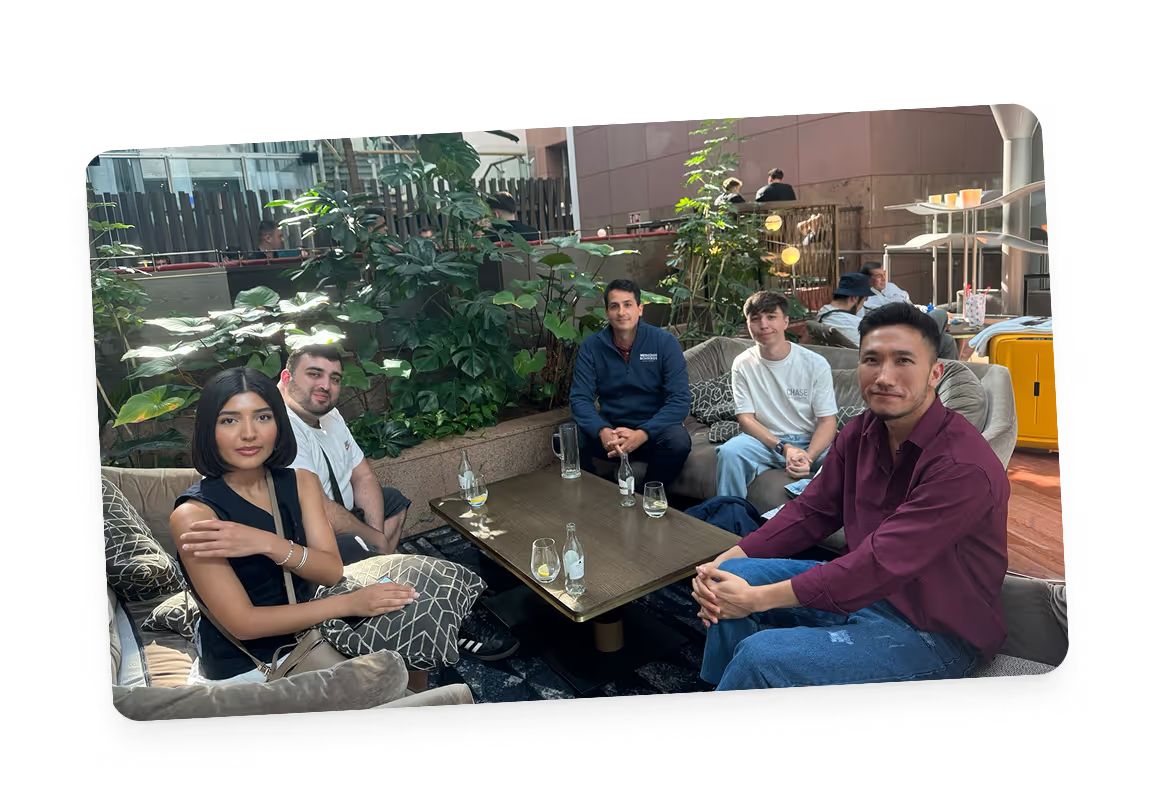
In-person applicant meetups in Switzerland, the UK and online, access to a community of over 300 current students abroad and qualified doctors, plus the mapping feature of our community and e-learning app. Practical all-round support with housing, mandatory insurance and local contacts.
3
Individual academic support for your child's first exams. If things aren't clicking, help is just a WhatsApp message away - in our experience, this is the moment that decides whether studying abroad holds up.

4
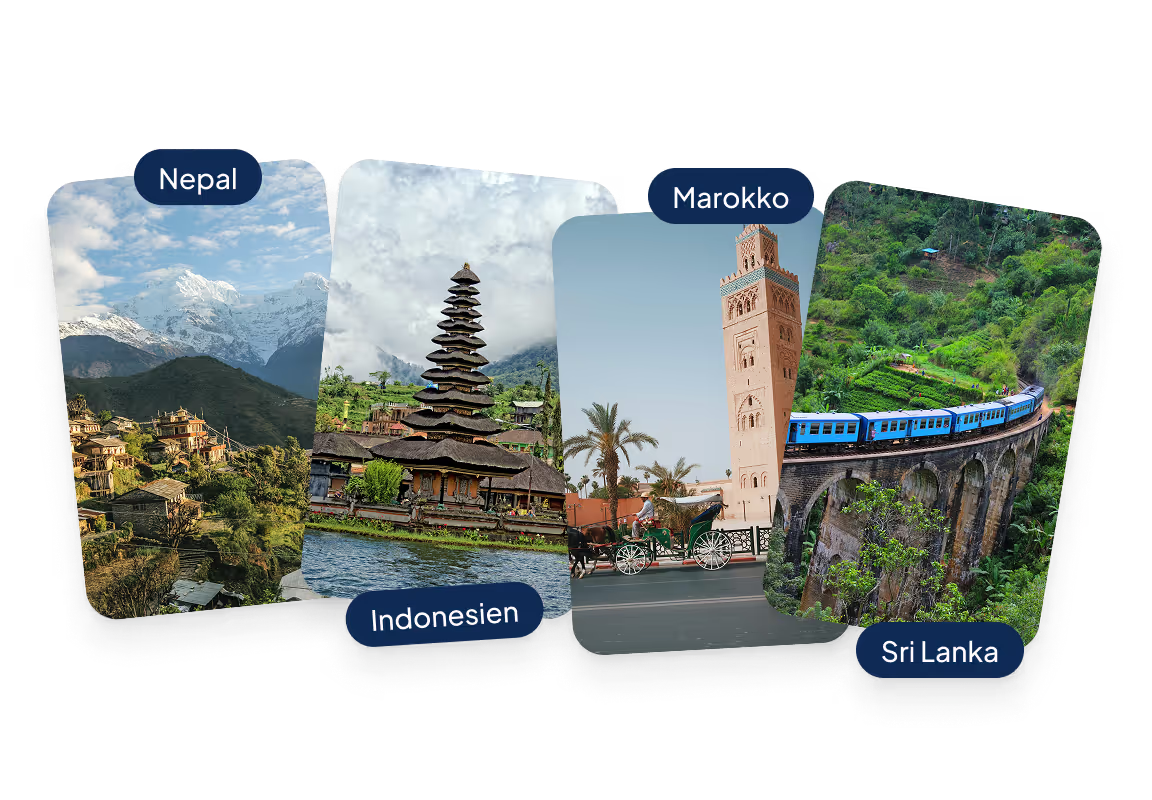
Nursing internships, clinical electives and the practical year can all be completed abroad - in Nepal, Indonesia, Morocco or Sri Lanka, for example. We arrange the placement in the desired specialty with fixed accommodation, on-site support, a transparent flat fee and guaranteed recognition by the relevant licensing authority.
5
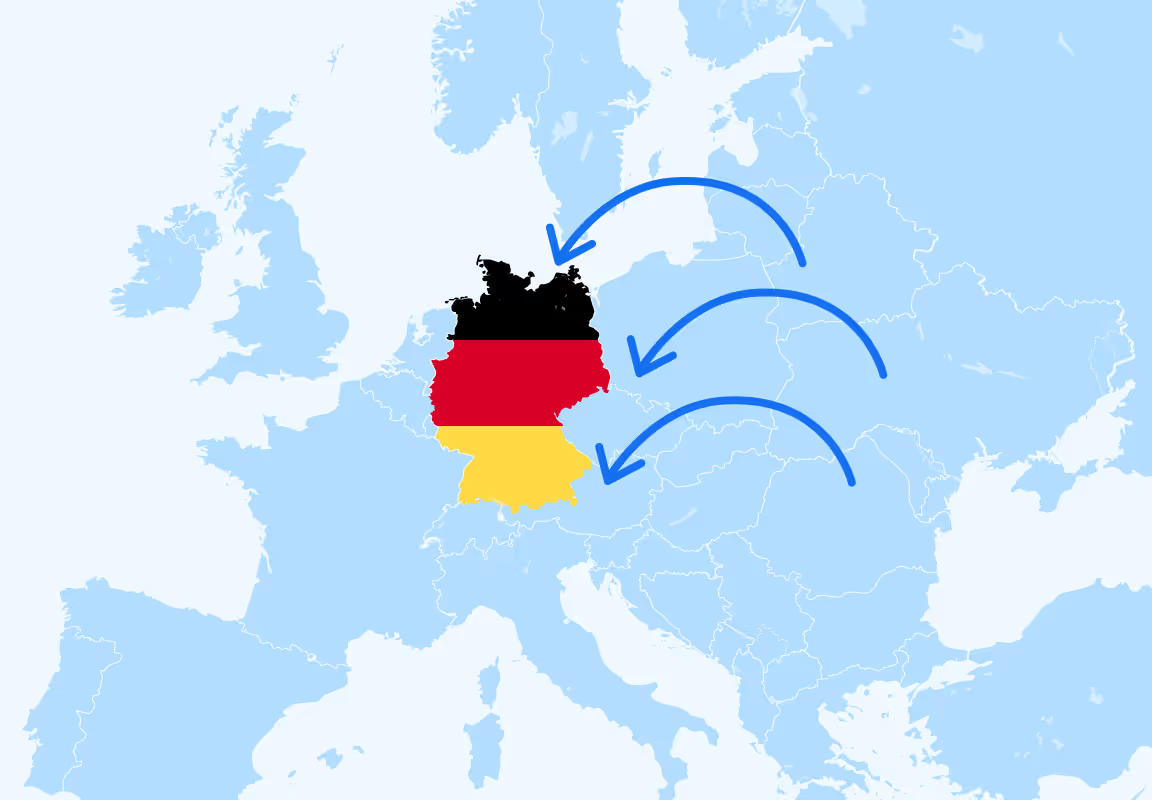
This service is available exclusively to students from Germany and Italy. If your child wants to return home after a few semesters, they don't start from scratch: we have the coursework completed abroad formally recognised and apply strategically to up to five universities in Germany or Italy for advanced-semester entry. Requirement: B2 level in German or Italian — we are happy to help find a suitable language teacher.
6
Support with building a strong application file, personal advice on choosing a specialty and help navigating the first steps as a junior doctor. Our support doesn't end at graduation - it ends with your child's first job.

7
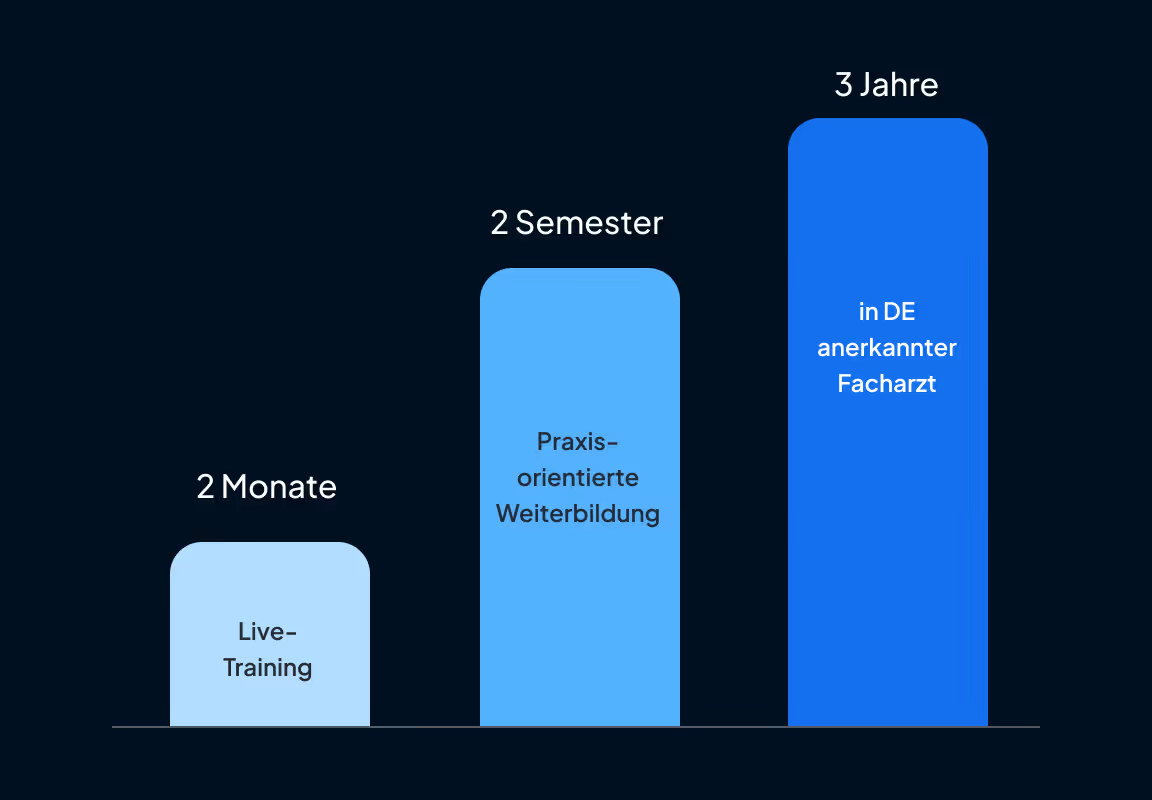
For those who want to go further: two months of live training in aesthetic medicine in Tbilisi, two semesters of hands-on dental implantology in Belgrade, or a three-year orthodontics specialist programme in Cyprus - all fully recognised in your home country.
8
1
2
3
4
5
Direct access
Parents are always welcome - in the first consultation and beyond. You can reach me personally whenever you have a question, and you can reach our local contacts whenever it's about your child's day-to-day life. Our support doesn't end at enrolment.
Many families join the first call as two or three. We think that's exactly right - this is a family decision, and in our experience the best questions come from the parents.
From safety and costs to degree recognition and returning home. Tap a question to see the answer.
My child is only 17 - does a legal guardian need to be present?
At some universities and with certain authorities, a minor requires a legal representative on site - sometimes also a signed parental consent form. Experienced members of our team at the university location can take on this role. We clarify what each particular university requires before the application and document everything in writing.
Who guarantees my child will get a place?
No one can make a serious guarantee. Our track record speaks for itself: at many partner universities, our placement success rate is between 98 and 100 per cent. Since we work entirely on a success-based model, your success is our success.
What does the degree cost in total?
Tuition fees typically run between 3,500 and 6,000 euros per semester; at Europe's most affordable partner university - for which we hold exclusive placement rights - the fee is 1,750 euros per semester. Living costs at most of our locations are below what you'd pay at home. We walk through the full six-year total with you - for a limited number of families, the placement fee can also be paid in instalments.
Are there scholarships, grants or student loans?
Depending on your situation, government study-abroad grants, scholarships or student loans specialising in medical education may be available. We work with financing partners who know this landscape well. What fits your case is something we look at together - eligibility checks are handled by the relevant authority.
Is the degree recognised for licensing worldwide?
For universities within the EU, automatic recognition applies under Directive 2005/36/EC. Non-EU universities in our programme follow EU-aligned curricula and are listed in the relevant international recognition databases; the equivalence process with your national licensing authority is a well-defined, manageable procedure. USA: USMLE pathways apply. Canada: MCCQE. UK: PLAB plus GMC registration. We tell you which category a university falls into before you decide - not after.
How long does the degree take, and how is it structured?
Medicine takes six years and covers 360 ECTS credits; dentistry is five to six years depending on the university. The structure mirrors what you'd find at home: a pre-clinical phase, a clinical phase, and a practical training year at the end.
What language is the degree taught in - and does my child need the local language?
Teaching runs entirely in English from the first lecture to the last - at some locations also in German. Your child does not need the local language for their studies; I completed my own degree in Bulgaria without speaking Bulgarian. At a handful of locations, basic language skills are helpful for patient contact; the relevant courses are built into the study plan.
What does the application process involve, and when does the degree start?
After the first call, we compile the documents, handle certified translations and prepare your child for the selection process - typically biology and chemistry at school-leaving level; it's about solid foundation knowledge, not top grades. The main intake is September or October; some universities start in February. Application deadlines fall significantly earlier.
Where will my child live - and what does life cost there?
Common options are a student hall of residence, shared housing with other students from our group, or a small flat. Our local contact helps with the search, viewings and the rental agreement. Rent, food and public transport are noticeably cheaper at most of our locations than at home - we give you a realistic range for every university we recommend.
What about visa, residency and health insurance?
Within the EU, no visa is needed - your child simply registers locally on arrival. Outside the EU, a student residence permit is required; we know the process and walk through it step by step. Health insurance cover is arranged through our partners before your child departs.
How often can my child come home?
Our European locations are reachable by direct flight or a short train journey. Christmas breaks, semester holidays and usually extended weekends are all straightforward. Many parents visit their child on location during the first semester - in our experience, that single visit takes away most of the worry.
What happens if my child fails an exam?
The universities have clear resit rules, which we explain to you upfront. Unlike some home systems, a single failed attempt does not put the whole degree at risk. We also offer exam preparation, study groups and tutoring - as a rule this kicks in well before things become critical.
